Fuzzy Quantization Based Bit Transform for Low Bit-Resolution Motion Estimation
Chuan-Ming Song, Yanwen Guo, Xiang-Hai Wang, and Dan Liu
Signal Processing: Image Communication, 2013, 28(10): 1435-1447. (SCI, EI)
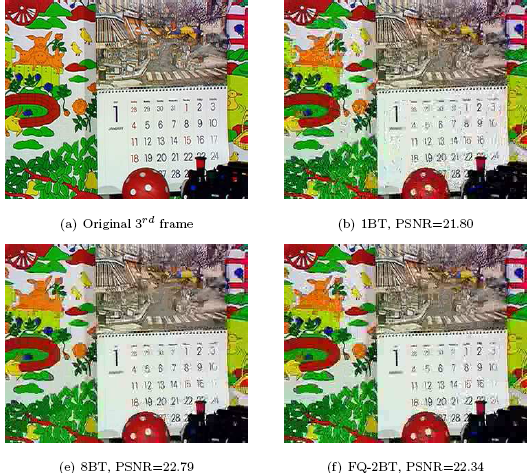
This study proposes a novel fuzzy quantization based bit transform for low bit-resolution motion estimation. We formalize the procedure of bit resolution reduction by two successive steps, namely interval partitioning and interval mapping. The former is a many-to-one mapping which determines motion estimation performance, while the latter is a one-to-one mapping. To achieve reasonable interval partitioning, we propose a non-uniform quantization method to compute coarse thresholds. They are then refined by using a membership function to solve the mismatch of pixel values near threshold caused by camera noise, coding distortion, and etc. Afterwards, we discuss that the sum of absolute difference (SAD) is one of the fastest matching metrics suitable for low bitresolution motion estimation in the sense of mean squared errors. A fuzzy quantization based low bit-resolution motion estimation algorithm is consequently proposed. Our algorithm not only can be directly employed in video codecs, but also can be incorporated into other fast or complexity scalable motion estimation algorithms. Extensive experimental results show that the proposed algorithm can always achieve good motion estimation performances for video sequences with various characteristics. Compared with one-bit transform, multi-thresholding two-bit transform, and adaptive quantization based two-bit transform, our bit transform separately gains 0.98 dB, 0.42 dB, and 0.24 dB improvement in terms of average peak signal-to-noise ratio, with less computational cost as well.
|
样本驱动的半自动图像集前背景分割
pdf
汪粼波, 郭延文, 夏天辰, 金国平
计算机辅助设计与图形学学报,2013,25(6):794-801
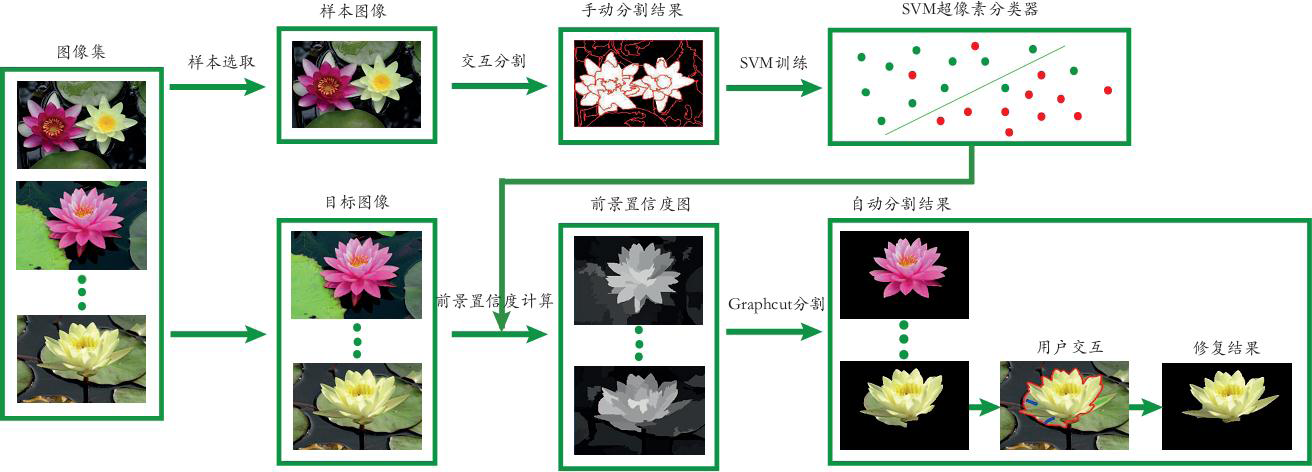
图像集的前背景分割是近年来图像处理与图形学领域的一项热点研究工作。针对图像集中图像逐个进行交互分割涉及大量的用户操作,效率低下,而联合分割方法通常局限于处理具有相似前景的图像集,且因需求解大规模的优化问题较为耗时的问题,提出一种样本驱动的半自动图像集分割方法。该方法首先选取若干图像作为样本进行手动交互分割,训练基于样本图像超像素特征描述的支持向量机分类器;对于其余待分割图像,根据其超像素特征描述到支持向量机分隔超平面的距离计算基于双弯曲Sigmoid函数映射的前景置信度,再采用图切割的算法实现目标图像的快速自动分割。对于包含错误分割的个别图像,进一步提出一种交互式局部修正方法修复错误分割区域,并获得最终的精确分割结果。在2个标准数据集上进行算法有效性验证和对比实验的结果表明,与联合分割算法相比,文中方法能更好、更快地实现在线分割;与逐个交互分割算法相比,文中方法能以相对极小的交互量实现对目标图像集的精确分割。
|
基于模糊量化和2 bit深度像素的运动估计算法
pdf
宋传鸣,郭延文, 王相海,刘丹
通信学报,2013, 34(7):59-70.
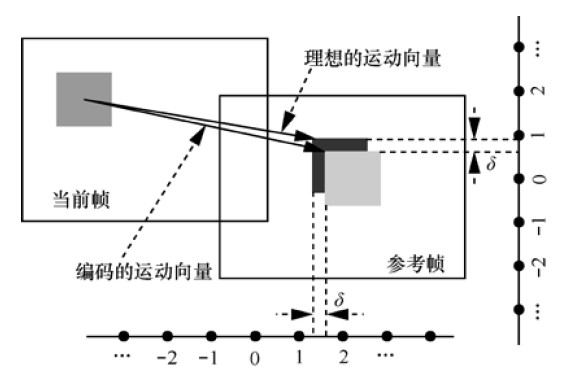
提出了一种2 bit 深度像素的运动估计算法。首先,将像素深度的降采样过程形式化为区间分划和区间映射
2 个步骤,其中前者为多对一映射,决定着运动估计性能,后者为一一映射;其次,提出一种非均匀量化方法求解区间分
划的3 个初始阈值,并利用隶属度函数对初始阈值细化,从而克服信号噪声等因素导致的初始阈值周围像素值的误
匹配;再次,讨论了适用于2 bit 深度像素运动估计的误差度量准则,进而提出了基于模糊量化和2 bit 深度像素的
运动估计算法;最后,借助信号自相关函数,建立比特深度转换误差—运动向量精度模型来估计该算法所能达到的
预测精度。实验结果证明,对于多种类型的视频序列,尤其是场景细节和物体运动比较复杂者,该算法始终能保持
较高的估计精度,运动补偿的平均峰值信噪比较之传统2 bit 深度像素的运动估计提高0.27 dB。
|
结合浅景深与构图的图像质量评价
pdf
顾婷婷, 郭延文, 殷昆燕
中国图象图形学报,2013,18(5):574~582
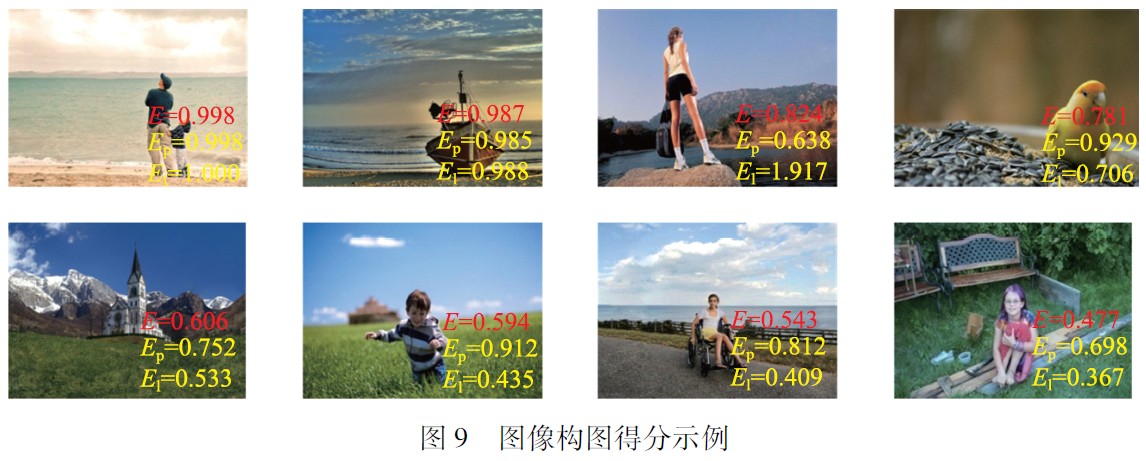
近年来,图像质量评价方法在图像处理和理解领域受到越来越多的关注。传统的方法主要关注噪声、清晰度、分辨率等影响图像质量的底层因素。随着数码设备的不断发展,这些底层因素已经得到很好的解决,人们能够很容易的获得具有较高底层质量,即低噪声、高清晰度、高分辨率的图像。因此图像质量评价的焦点逐渐转向从美学的角度进行评价。对于一幅图像,主要从两个角度来考虑其是否符合人类主观的美学要求“1)图像的主题是否突出;2)图像的布局是否合理。基于上述考虑,提出一种结合图像景深和构图的质量评价方法:一方面,提出一种基于模糊度量的浅景深判断方法,浅景深的图像能突出主题、虚化背景,具有更强的视觉冲击力与美学表现力;另一方面,提出一种基于“三分法”的图像构图评价方法,符合“三分法”构图的图像布局更加紧凑有力、简介明了、符合人类的欣赏习惯;最后,将浅景深判断与图像构图评价进行结合,从美学的角度自动地对图像进行客观、综合的评价。按本文方法,可以挑选出符合以上美学规则的图像。从实验结果可以看出,根据本文方法选出的高质量图像也符合人类主观的美学需求。
|
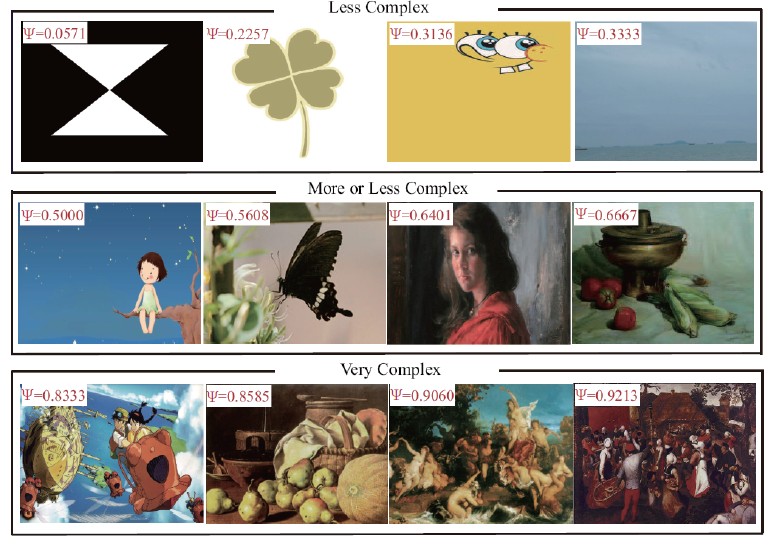
Fusing Multiple Visual Features for Image Complexity Evaluation
Kunyan Yin, Linbo Wang, and Yanwen Guo
Pacific-Rim Conference on Multimedia (PCM),2013
In spite of the wide applications in computer vision and cognitive research area, defining an effective complexity measure for color images remains a challenging task. Conventional approaches are generally built upon information theory or a certain visual feature. In this paper, we propose a new method directly exploiting multiple effective visual features including color, clutter and the number of objects to measure the complexity of color images. Furthermore, we present a fuzzy clustering model for combining all the proposed features, which provides specific scores to evaluate image complexity. Experimental results are presented and show good consistency between the proposed objective metric and subjective assessment by human observers.
|
| |

 Publications